
What Should You Know Before Using ViaBTC TX Accelerator?
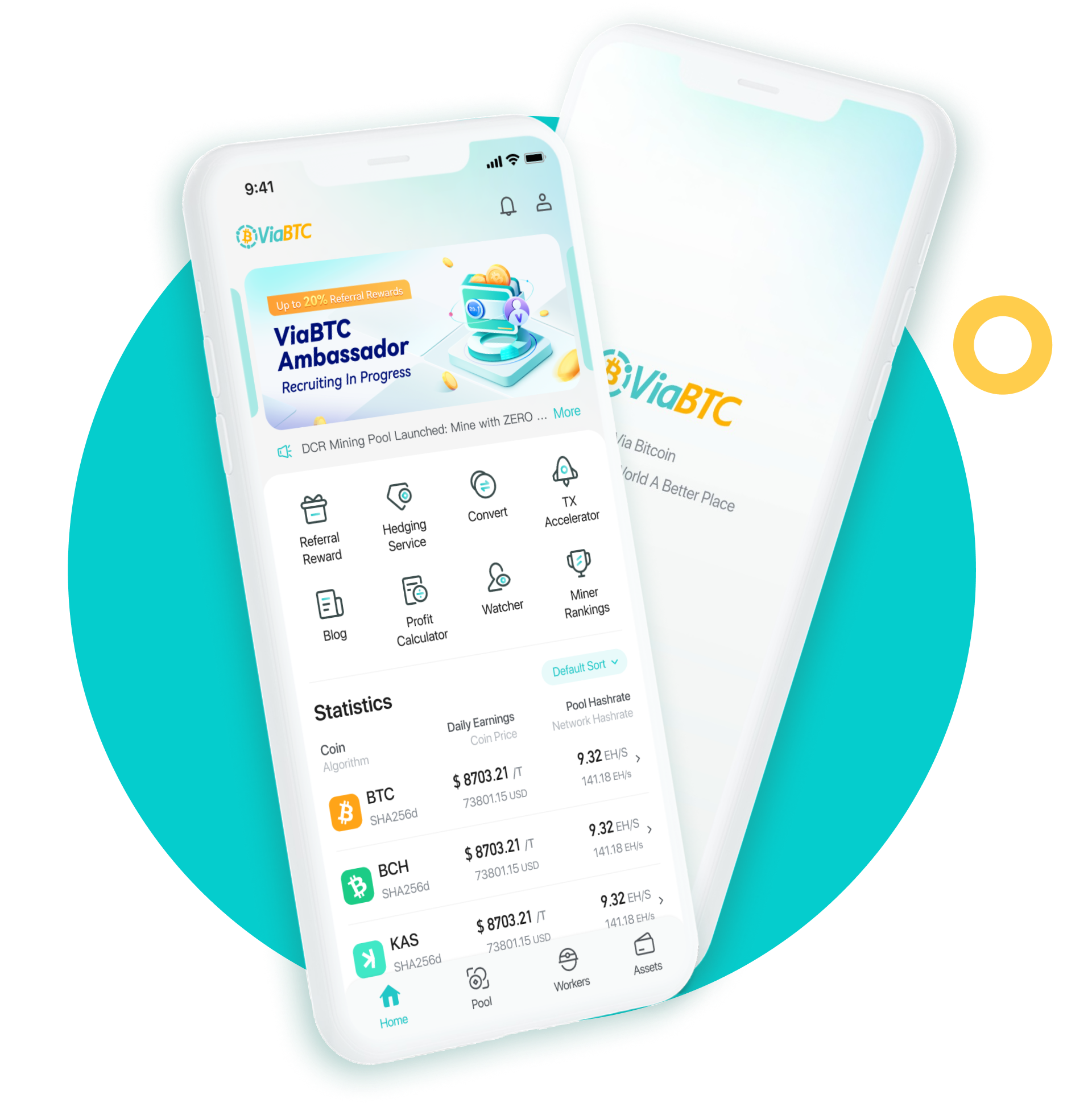
ViaBTC TX Accelerator is useful when a valid Bitcoin transaction is waiting because its original fee is no longer competitive with the mempool. ViaBTC’s current free-service page requires a transaction size of no more than 0.5 KB and a fee rate of at least 0.0001 BTC/KB. Paid acceleration accepts BTC, BCH, or LTC for payment and gives the transaction priority after the service fee is received. The service does not rewrite the transaction, raise its original miner fee, or promise confirmation within a fixed number of minutes. Before paying, check transaction size, fee rate, unconfirmed parents, RBF availability, CPFP options, and whether waiting would cost less.
A delayed Bitcoin transaction is usually a fee-selection issue rather than a technical failure. Miners choose transactions from their mempools, where transactions compete for limited block space. A payment sent with a suitable fee at 9:00 may become less competitive at 10:00 if many transactions paying more sat/vB arrive. Bitcoin targets an average block interval of about 10 minutes, but an individual block can arrive much sooner or much later, so “30 minutes pending” by itself does not show that acceleration is needed.
The first useful check is therefore the fee rate, not the amount of BTC being transferred. A $20,000 payment does not automatically receive higher priority than a $200 payment. Miners mainly care about the fee earned relative to the block space consumed, along with their mempool and package-selection policies. A 250-vB transaction paying 10 sat/vB contributes about 2,500 satoshis; a transaction twice as large needs roughly twice the absolute fee to offer the same rate.
That size issue matters because ViaBTC applies a firm free-submission limit. Its live accelerator page says free submissions must be 0.5 KB or smaller and must pay at least 0.0001 BTC/KB. At 0.5 KB, a transaction is only 50% of a 1 KB reference size, so a payment built from many small UTXOs can fail the free size test even when the BTC amount sent is modest.
| Item to check | Why it matters before submission |
|---|---|
| Transaction size | Free acceleration accepts no more than 0.5 KB |
| Fee rate | Free submissions require at least 0.0001 BTC/KB |
| TXID | The accelerator needs the transaction ID, not a wallet address |
| Parent transactions | An unconfirmed input can prevent the child from confirming |
| Confirmation status | Paying after the transaction has already confirmed provides no practical benefit |
| RBF status | A replacement transaction may cost less than paid acceleration |
The hourly free allowance deserves separate attention because ViaBTC’s published pages are not fully aligned. Its Help Center article, updated in 2024, states that 20 free acceleration opportunities are provided per hour. The live tool currently displays the real-time hourly availability, which can reach zero. For an actual submission, the number shown on the live ViaBTC TX Accelerator page is more useful than an older article, screenshot, or tutorial.
Free submission also differs from paying for acceleration. ViaBTC says a successfully submitted free transaction receives priority for inclusion in the next block mined by ViaBTC. For paid service, its 2024 Help Center states that ViaBTC can notify cooperating mining pools after payment has been received, allowing a cooperating pool to select the transaction when it produces a block. The paid option therefore changes who may provide the prioritization, not Bitcoin’s normal confirmation rules.
Acceleration does not create a new transaction. Unless the sender uses a replacement method such as RBF, the TXID, outputs, inputs, and original miner fee remain the same.
That distinction explains why a block explorer can still show a low original fee after an acceleration order has been accepted. The service works at the mining-selection layer rather than editing the transaction itself. In 2026, anyone checking the transaction on a normal Bitcoin explorer should therefore expect to see the same TXID after accelerator submission. A different TXID would normally point to a replacement transaction or another separately broadcast transaction, not ordinary pool prioritization.
Users should also separate acceptance from confirmation. ViaBTC states that acceleration time cannot be precisely estimated because block production, network congestion, transaction fees, and mining-pool conditions affect confirmation timing. Bitcoin’s roughly 10-minute target is an average, not a 10-minute service-level promise. A transaction accepted at 2:00 p.m. can remain pending beyond 2:10 p.m. even when the accelerator is operating normally.
An unconfirmed ancestor can make the situation more complicated. Suppose Transaction A sends BTC to a wallet, and Transaction B spends one of A’s outputs before A confirms. B depends on A because a miner cannot validly confirm that spend without also confirming the transaction that created its input. ViaBTC lists an unconfirmed previous transaction among the reasons free acceleration can fail and advises users to accelerate the earlier transaction first or consider the paid service.
A block explorer can usually reveal that relationship through an “unconfirmed parent,” “ancestor,” or similar field. Checking the parent first avoids paying attention to the wrong TXID. Bitcoin has supported increasingly sophisticated package and replacement policies over the years, but the basic dependency has not changed: a child cannot create spendable history before its parent exists in the confirmed chain.
RBF gives the sender another route. BIP 125 was assigned in 2015 and described opt-in full Replace-by-Fee, allowing appropriately signaled unconfirmed transactions to be replaced by versions that pay more. Bitcoin Core later expanded replacement policy; current documentation notes that full RBF became the default policy in version 28.0 and that explicit replaceability signaling is no longer required under the newer policy. Wallet behavior can still differ, so the practical question is whether the sending wallet provides a usable fee-bump function.
For a sender who sees “Increase fee,” “Speed up,” or a similar wallet control, comparing costs is worthwhile. If replacing a transaction requires an extra 8,000 satoshis while an accelerator quote costs considerably more, a wallet-based replacement may be cheaper. Bitcoin Core’s current replacement documentation also applies relay requirements to replacement transactions; for example, it gives a 500-vB replacement paying at least 50 additional satoshis when the incremental relay rate is 0.1 sat/vB.
A recipient may have another option: Child Pays for Parent. CPFP spends an output from the low-fee parent using a child transaction that pays enough for miners to consider the combined package attractive. Consider a simplified pair where the parent is 200 vB and pays 2 sat/vB, while the child is 150 vB. The parent contributes 400 satoshis. If the user wants the 350-vB package to average 20 sat/vB, the combined fee would need to reach about 7,000 satoshis, leaving roughly 6,600 satoshis for the child.
That arithmetic also shows why CPFP is not automatically cheaper. The child consumes additional block space, so raising the package fee rate can become expensive during high-fee periods. In a 2026 fee environment where the user has access to RBF, CPFP, and paid acceleration, comparing the actual satoshi cost of all three is more useful than choosing a method by name.
Paid accelerator pricing also should not be treated as a fixed menu price. ViaBTC’s Help Center says pricing can take transaction volume and current cryptocurrency prices into account. The amount shown for one TXID therefore should not be assumed to apply to another. A larger transaction consumes more block space, while network conditions can change before a second order is requested.
Consider two transfers:
-
A 180-vB transaction sends 0.8 BTC from one input.
-
A 700-vB transaction sends 0.02 BTC after combining numerous small inputs.
-
The second transaction is nearly 289% larger by virtual size even though it transfers much less BTC.
-
The larger transaction also exceeds ViaBTC’s 0.5 KB free-service size ceiling.
UTXO structure therefore matters more than the fiat amount shown in a wallet. Users who regularly receive many small payments can eventually create large spending transactions because each input adds data. SegWit, activated on Bitcoin in 2017, changed how transaction weight is accounted for, but spending many inputs still increases the space a transaction consumes.
Propagation should be checked before assuming the fee is the problem. ViaBTC documents a “Tx hash not found” case in which its mempool has not received the transaction. It recommends checking the TXID and, when broadcast quality is the issue, rebroadcasting the transaction before trying acceleration again. A transaction unseen by the service presents a different situation from one already sitting in its mempool with an unattractive fee.
Rebroadcasting tries to make nodes see the transaction; acceleration asks participating miners to give an already valid transaction greater priority.
That difference helps narrow the available choices. If several independent explorers show the transaction, propagation is less likely to be the main issue. If no normal explorer can locate the TXID shortly after broadcast, first verify that the wallet actually sent it and that the copied identifier contains all 64 hexadecimal characters. A wallet address, exchange withdrawal reference, or block hash is not a substitute for the transaction ID.
Users also need to account for refund terms before paying. ViaBTC states that an acceleration submission cannot be canceled and that the service is non-refundable after submission. A 2026 user who sees the mempool clearing quickly should therefore check the transaction immediately before completing payment. If it has already entered a block, the reason for purchasing acceleration has disappeared even though the service’s no-refund condition remains.
The economic comparison can be kept simple:
| Situation | Option worth checking first |
|---|---|
| Sender controls a wallet with fee bumping | RBF |
| Recipient controls an unconfirmed output | CPFP |
| Transaction meets ≤0.5 KB and fee requirements | Free ViaBTC submission |
| RBF and CPFP are unavailable | Paid acceleration |
| Fee is close to current confirmation levels | Waiting |
| Parent transaction is still pending | Parent transaction first |
| TXID is not visible to ViaBTC | Verify and rebroadcast |
Waiting deserves a place in that table because mempool demand is not constant. A transaction 30% below the fee rate currently being selected may become competitive later if higher-paying transactions are cleared and fewer new ones arrive. No accelerator fee is needed when time does not matter. The trade-off changes for an exchange deposit, merchant settlement, collateral transfer, or another payment where several hours of delay has a measurable financial cost.
Privacy is narrower but still relevant. A Bitcoin TXID is already public blockchain data, yet submitting it through an account-based service can associate the public transaction with account login information, order history, payment records, and timing. The blockchain transaction itself does not become 100% more public because it was accelerated; the additional information exists at the service-account level.
No legitimate acceleration process requires a Bitcoin seed phrase or private key merely to prioritize an already broadcast transaction. The transaction is identified by its public TXID. A site asking for 12 or 24 recovery words to accelerate an ordinary BTC payment is requesting wallet-control information that is unnecessary for mining-pool prioritization.
Before submitting, one final check should cover six fields: TXID, current confirmations, virtual size, fee rate, unconfirmed ancestors, and replacement availability. The free ViaBTC rules published in 2024 specify the 0.5 KB and 0.0001 BTC/KB thresholds, while the live page supplies the current hourly capacity. Paid acceleration is better evaluated against the exact quote shown for the individual transaction rather than a price seen in an older example.
A transaction already paying near the mempool clearing rate may need only another block or two. A very low-fee transaction without RBF may have a stronger case for pool acceleration. A transaction blocked by an unconfirmed parent requires attention to the parent first. Matching the service to the actual transaction state prevents paying for a method that does not address the reason confirmation is delayed.
Read deeper. Skip the clutter. Join the Mania Club.
No pop-unders, no redirects — just the obsessively curated archive the 6.4M-strong community trusts. Newsletter is free, always will be.